


Quick Links:
Background |
Stress and uncertainty are increasingly persistent features of work and life. Senior executives and experienced professionals face sustained pressure, rapid change, complex relationships and multiple work-life roles. Knowledge of stress management does not necessarily translate into change: under pressure, people often revert to familiar patterns, while relationships that should provide support may also become sources of depletion. Psychological resilience therefore involves the capacity to recover, self-regulate, maintain clear judgement and continue to act effectively over time. Contemporary psychology and neuroscience have developed an increasingly systematic evidence base on how people respond, adapt and change under pressure. In parallel, selected contemplative practices rooted in Eastern traditions—including mindfulness, compassion, meditation and related Buddhist-derived practices—have increasingly entered psychological, clinical and neuroscientific research. The programme brings these developments into a coherent executive-learning pathway, while maintaining clear academic boundaries between empirical evidence, interpretive perspectives and lived practice. |
Learning Outcomes | |
| 01 Seeing Yourself Clearly Under Pressure: Response Patterns, Relationships, and Choices Gain a new understanding of yourself through three dimensions—your response patterns, inner experience, and real-life circumstances—so that you can see your choices, relationships, and behaviour under pressure more clearly, and gain self-understanding that goes beyond any single method. | 02 Building Your Own Discernment: What Is Worth Believing, What Suits You When faced with various psychological, mind-body, and personal-growth approaches, you will be able to judge what is worth believing, what suits you, and what is worth practising over the long term. |
| 03 Seeing Where Change Really Happens: From “Knowing” to “Doing” Through scientific research, professional practice, and first-hand experience, you will understand how change moves from “knowing” into actual behaviour and find ways of adjusting and practising that suit you. | 04 Building a Future-Oriented Personal Resilience Framework: A More Stable Inner Anchor Integrate what you learn over the five days into a personal framework that can be used continuously and adapted as your life stages change—so that when facing future pressure, change, and important choices, you have a more stable inner anchor and greater room for choice. |
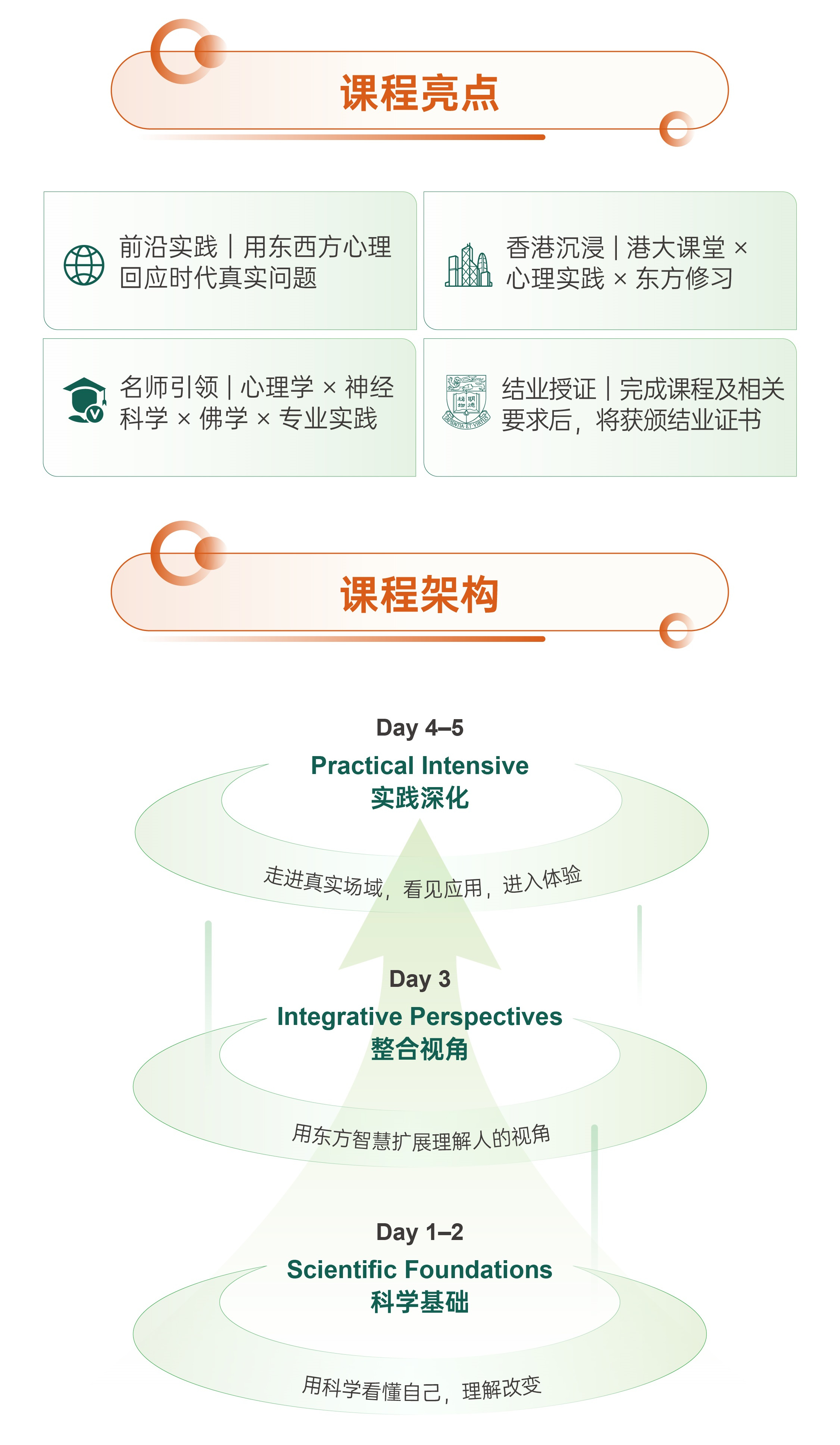
Programme Highlights and Structure |
 |
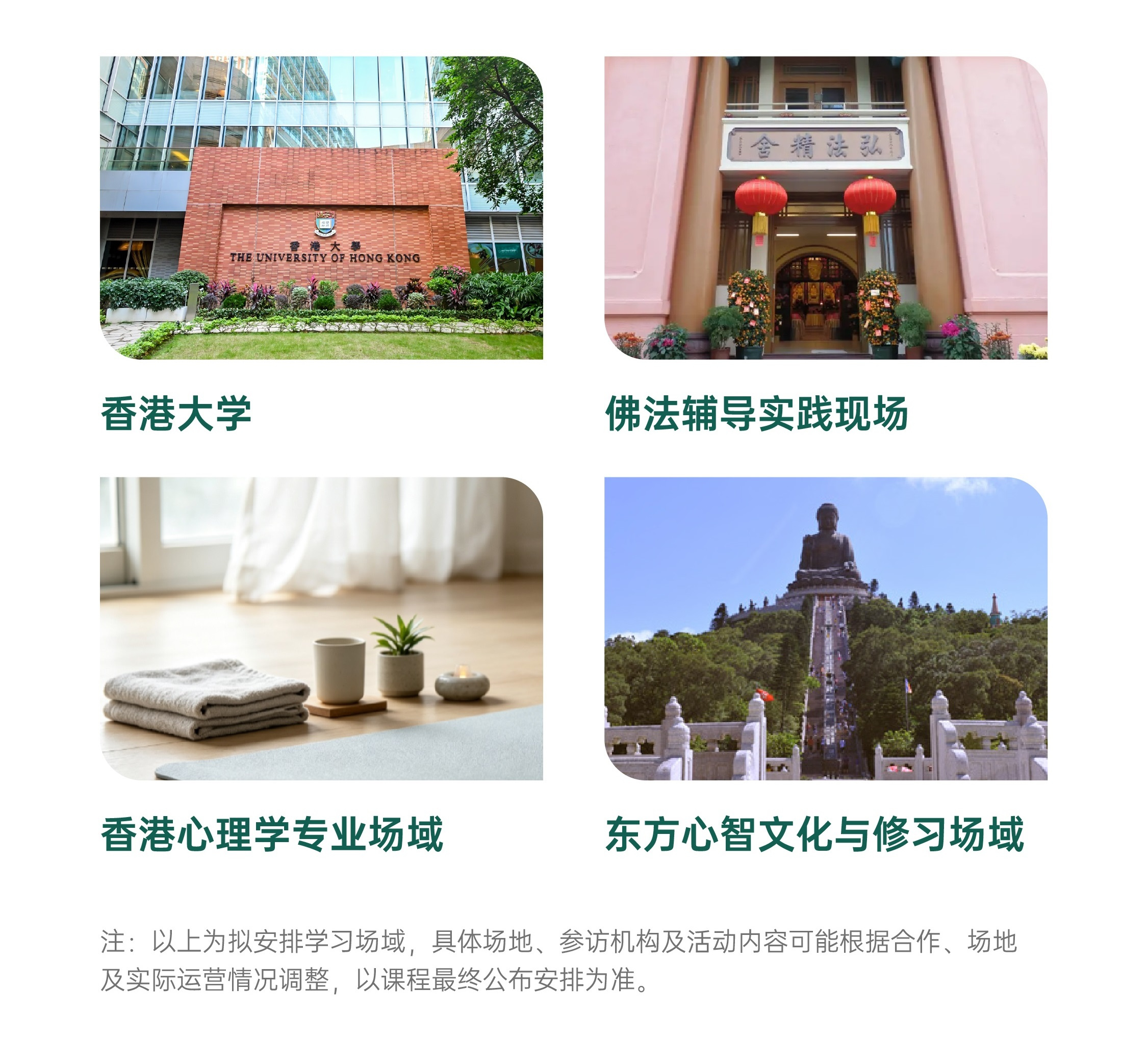
Learning Environments in Hong Kong |
 |
Suitable For |
|
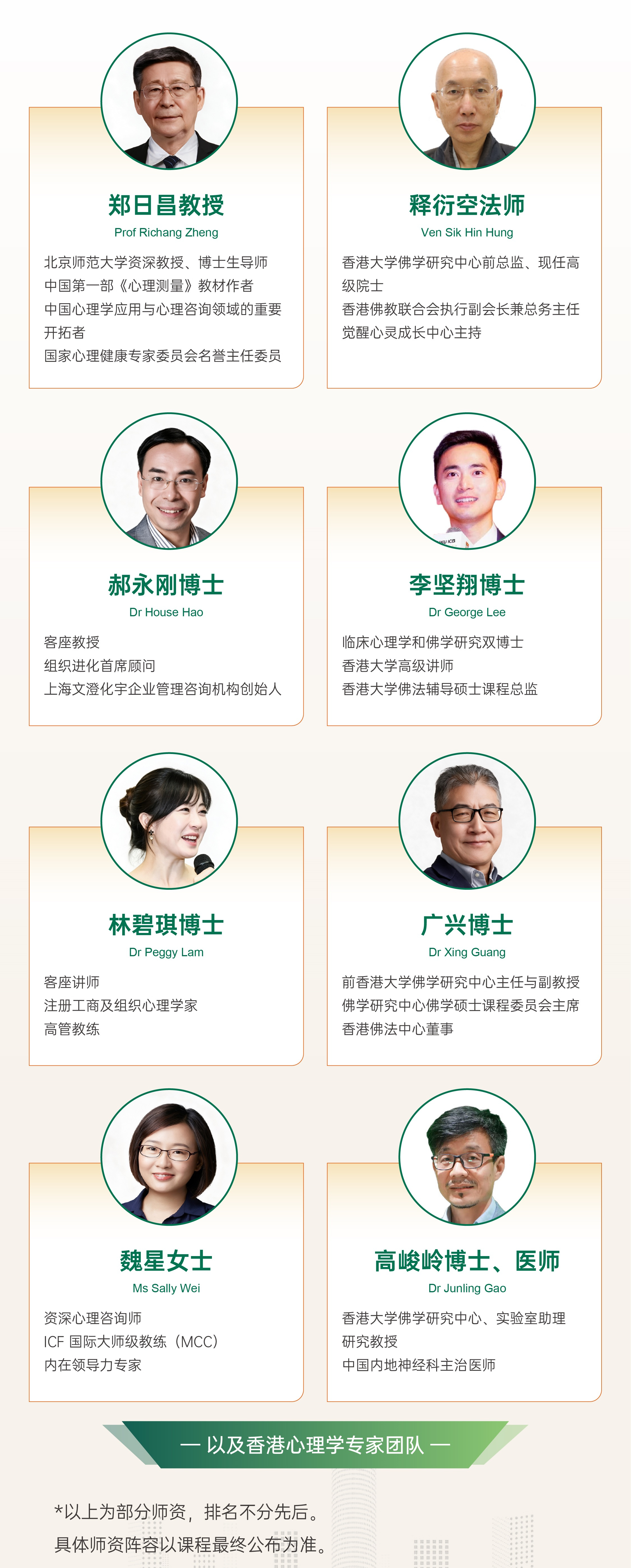
Teaching Members |
 |
Programme Content
- SEE YOURSELF: Psychological Resources, Relationships and Behaviour under Pressure
- UNDERSTAND CHANGE: The Resilient Brain and Trainable Mind
- BROADEN PERSPECTIVE: Eastern Perspectives on Change, Self and Cultivation
- SEE APPLICATION: What Really Helps a Person Change?
- ENTER EXPERIENCE: Finding Steadiness amid Change
Statement of AchievementUpon completion of the course, with an attendance rate of 80% or above and passing the assessment, the participant will be awarded a Statement of Achievement issued by HKU ICB. |
Application Guidelines |
Step 1 Application Preparation Step 2 Application Submission Step 3 Review Step 4 Payment and Registration For further information, please contact our centres in Beijing, Shanghai, Shenzhen, Guangzhou, and Chengdu. |
Fees and Charges
| Tuition fee: | HKD 38,000 |
| Meal and Travel: | Students are responsible for their own travel documents, visa, accommodation and transportation during their attendance of classes. |